

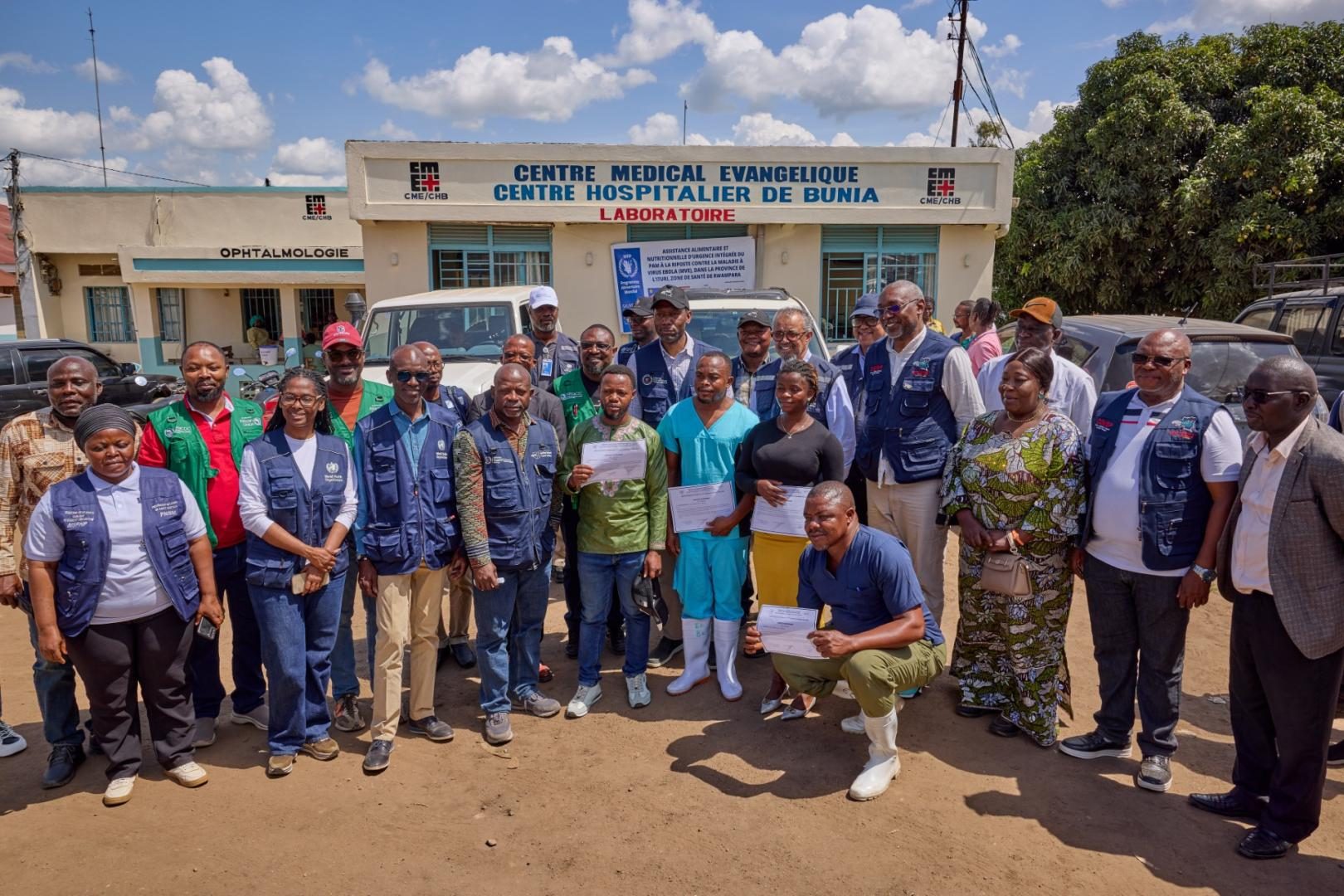
Geneva, Switzerland, 01 June 2026- /African Media Agency (AMA)/ – Four nurses who were being treated for Ebola disease caused by Bundibugyo virus have been discharged from a hospital in Bunia, the capital of Ituri, after recovering from the disease. More recoveries are expected, especially when people are diagnosed early and able to access care, and as outbreak response intensifies.
The health workers had been caring for people sick with Ebola at their facility earlier in May. In total, five people have now recovered from the virus. A laboratory worker had also recovered earlier on 28 May.
“This is a victory worth celebrating. It’s a strong message that it is possible to recover from Ebola when seeking care early in a dedicated health facility,” said Dr Dieudonne Mwamba Kazadi, the Director-General of the country’s National Institute of Public Health.
To help reinforce clinical care, the World Health Organization (WHO) handed over a refurbished Ebola Treatment Centre in Bunia to the health authorities. The facility has an initial capacity of 24 beds but can be expanded to 60 beds. WHO is also setting up an annex to the facility with up to 42 beds to be ready in the coming weeks.
As of 31 May, there were 210 confirmed cases reported in the country, with 17 confirmed deaths. 349 suspected cases are under investigations. In total, 16 health workers have been reported sick with Ebola during this outbreak.
WHO Director-General, Dr Tedros Adhanom Ghebreyesus, while on a visit to Bunia on 30 May, pointed out that although there were currently no licensed vaccine or treatment for Bundibugyo virus “it is not without hope. Ebola caused by the Bundibugyo virus can be survived with good medical care, and some people here in Ituri have already recovered. Seeking care early makes a real difference.”
Earlier this week, WHO advisory groups announced that several candidate treatments and vaccines are promising enough to warrant prioritization for evaluation in clinical trials. WHO is now working closely with the Democratic Republic of the Congo and Uganda to facilitate the implementation of research evaluation of these products.
Since the declaration of the Ebola outbreak on 15 May, the Democratic Republic of the Congo, with support from WHO and partners, has implemented key response measures, ranging from laboratory testing, disease surveillance, infection prevention and control to community engagement, and resource mobilization.
WHO is committed to ensuring that other essential health services and humanitarian assistance continue to be provided to communities across Ituri and beyond, and that what is implemented during this response will benefit the communities long after the outbreak is over.
Distributed by African Media Agency (AMA) on behalf of World Health Organisation.