

Geneva, Switzerland, 29 September 2026- /African Media Agency (AMA)/ – The World Health Organization (WHO) has supported the National Institute for Health Research (INIS) in assessing and improving the quality systems of its diagnostic laboratories for yellow fever, measles, and rubella. This is an important step towards achieving international accreditation and strengthening epidemiological surveillance in Angola.
Laboratories play a key role in the early detection of outbreaks, the confirmation of suspected cases, and the monitoring of priority public health diseases. Access to accurate and timely laboratory results enables public health authorities to make informed decisions and respond more effectively to health threats.
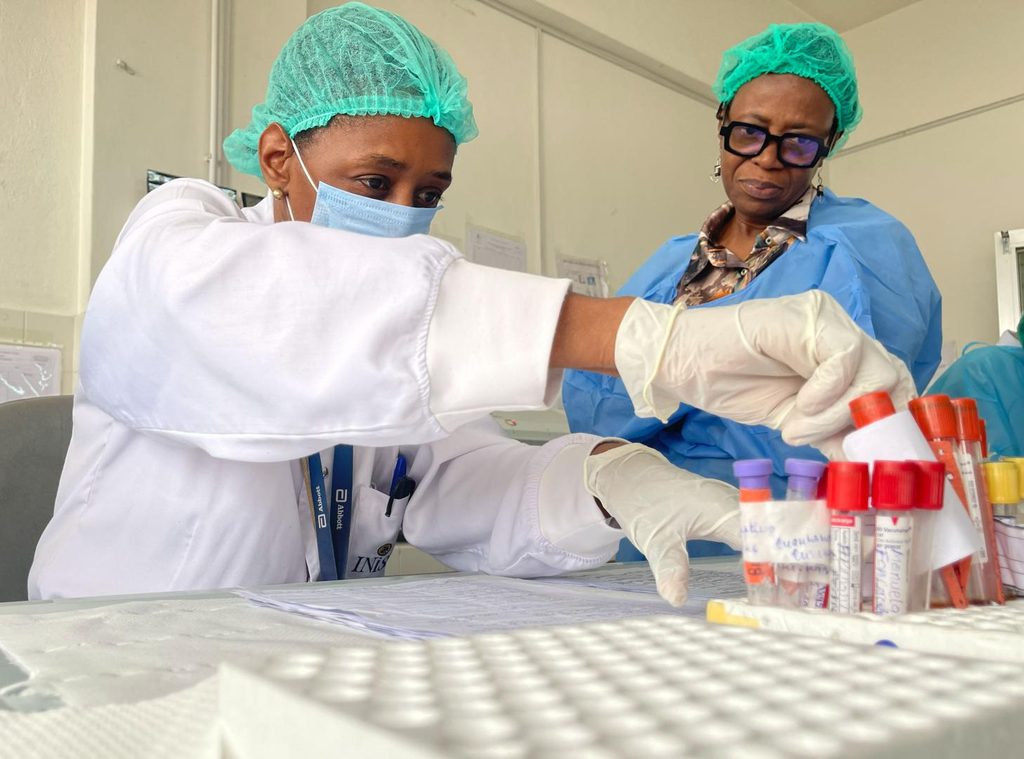
As part of the mission, a comprehensive assessment was conducted of the quality control processes at the INIS Immunology Laboratory, including a review of the pre-analytical, analytical, and post-analytical stages associated with the diagnosis of yellow fever, measles, and rubella. The technical team also analyzed laboratory procedures related to sample management, documentation, diagnostic methods, result recording, and quality monitoring.
The assessment confirmed significant progress in implementing quality management systems and identified opportunities to strengthen them further, bringing INIS’s processes closer to the international standards required for the accreditation of reference laboratories.
The mission also included an assessment of the technical performance of serological diagnostic platforms using ELISA (Enzyme-Linked Immunosorbent Assay) and molecular biology procedures based on RT-PCR, helping ensure the reliability and consistency of the laboratory’s results.
Improving laboratory quality is fundamental to public health security at national and regional levels. Accredited laboratories produce internationally recognized results, strengthen surveillance systems, and enable faster and more effective responses to outbreaks and public health emergencies.
WHO’s support in this area forms part of ongoing efforts to strengthen national capacities for disease surveillance and response in Angola, contributing to the early detection of health threats, the improvement of laboratory service quality, and the protection of public health.
“Investing in the quality of laboratories means investing in the country’s capacity to detect, monitor, and respond effectively to diseases. Strengthening these capacities will contribute to more robust surveillance and better protection of public health in Angola,” said the WHO Representative in Angola, Dr. Indrajiot Hzarika.
The technical mission, which took place between 14 and 18 September 2026, was led by Dr Annick Dosseh, Head of WHO Laboratories in the African Region, and Dr Mathias Karl-Otto Niedrig, Coordinator of the Global Yellow Fever Laboratory Network. As a result of this partnership, Angola continues to make progress towards strengthening its laboratory systems, increasing the resilience of its health system, and contributing to global health security objectives.
Distributed by African Media Agency (AMA)on behalf of World Health Organisation.