

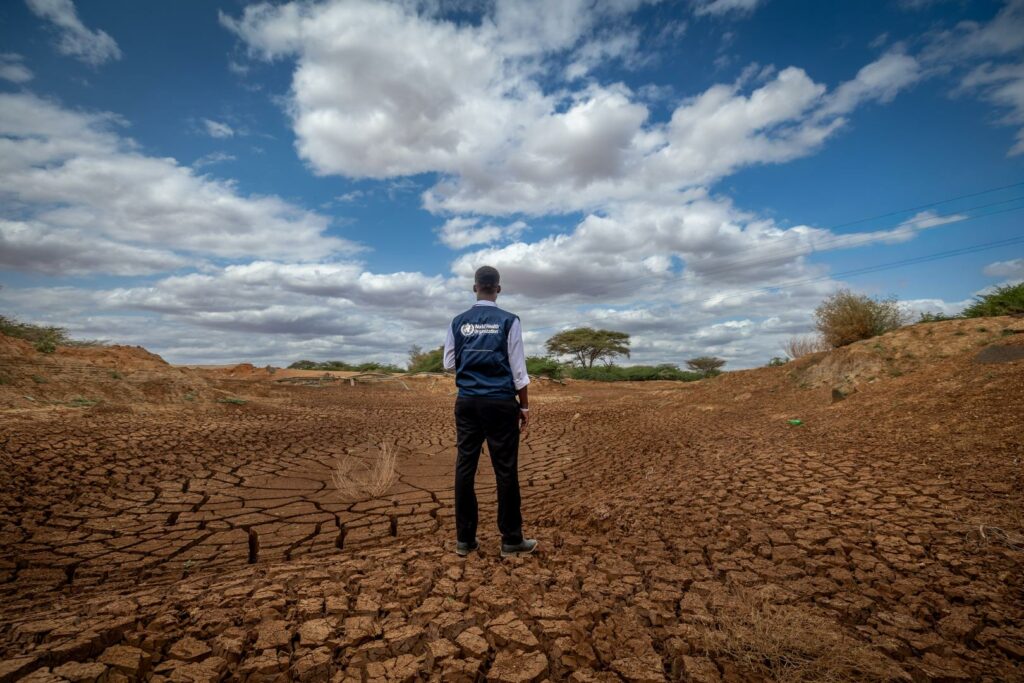
ROME, Italy, 23 January 2026-/African Media Agency(AMA)/- Over two million people across Kenya are facing worsening food insecurity following one of the driest October to December 2025 rainy seasons on record. The prolonged drought has led to rising rates of malnutrition, increased risk of disease outbreaks, and disrupted access to essential health services.
The 2025 short rains, which normally bring seasonal rainfall between October and December, delivered only 30 to 60 percent of the long-term average in most areas, producing the driest season recorded since 1981 in parts of eastern Kenya. The drought’s severe impacts are also being felt in neighboring countries such as Somalia, Tanzania, and Uganda, where millions more are at risk due to similar weather patterns and water shortages.
According to Kenya’s National Drought Management Authority, 10 counties are experiencing drought conditions. Nine counties, Wajir, Garissa, Kilifi, Marsabit, Kitui, Kwale, Kajiado, Isiolo, and Tana River, are in the “alert” phase, while Mandera is in the critical “alarm” phase. 13 other counties in the ASAL region which are currently categorised as “normal” are increasingly showing signs of drought stress, particularly in water and livestock indicators. The Kenyan government has warned that 2.5 million citizens are at risk of severe hunger and water scarcity if the drought persists.
The current emergency, while severe, was part of a known seasonal risk. The months between Kenya’s short and long rains present elevated drought risk in Arid and Semi-Arid Lands (ASAL) regions. WHO has supported Kenya’s Ministry of Health and National Public Health Institute to map out annual health risks using the Strategic Tool for Assessing Risks (STAR), WHO’s comprehensive toolkit for evidence-based public health risk assessment.
Acting on these early warnings, in November 2025, WHO handed over assorted emergency supplies to the Government of Kenya received, including cholera kits, pneumonia kits, and essential supplies and equipment pre-positioned in high-risk counties before the drought intensified. These supplies have the capacity to reach over 5000 people, though significantly more resources are needed to meet the scale of need.
“We are seeing multiple health threats converging,” said Dr. Martins, Head of Emergency Preparedness and Response, WHO Kenya. “Water scarcity is forcing families to rely on unsafe sources, raising the risk of cholera, typhoid, and diarrhoeal diseases. Drought-induced heat and limited vegetation are also concentrating disease vectors near scarce water points, heightening transmission risk. Livestock herds, which provide vital food source for pastoralist communities, have been affected, leaving children and pregnant women at severe risk of acute malnutrition.”
Dr. Martins also noted that prolonged dryness hardens soils, reducing their ability to absorb water when rains arrive. “While communities desperately need rain, compacted soils can trigger flash floods, adding waterborne diseases and injuries to populations already weakened by months of food insecurity. Climate change is intensifying these extreme weather patterns, making droughts and floods more severe and unpredictable.”
“WHO is calling on national and county governments, humanitarian agencies, and communities to mobilize urgently,” said Dr. Neema, WHO Acting Representative to Kenya. “Our immediate priority must be ensuring communities have access to adequate food supply and safe water for both people and livestock. Coordinated efforts are needed to prevent the situation from worsening and to mitigate further health impacts.”
Immediate action to protect health and nutrition remains essential as communities face prolonged hot, dry conditions and reduced resilience. Strengthening integrated health, nutrition, and water services will be critical in the months ahead as populations await the March-April-May long rains.
Distributed by African Media Agency (AMA) on behalf of Word Food Programme